Open-Weight AI Models in 2026: Singapore Developers' Smartest Cost Move

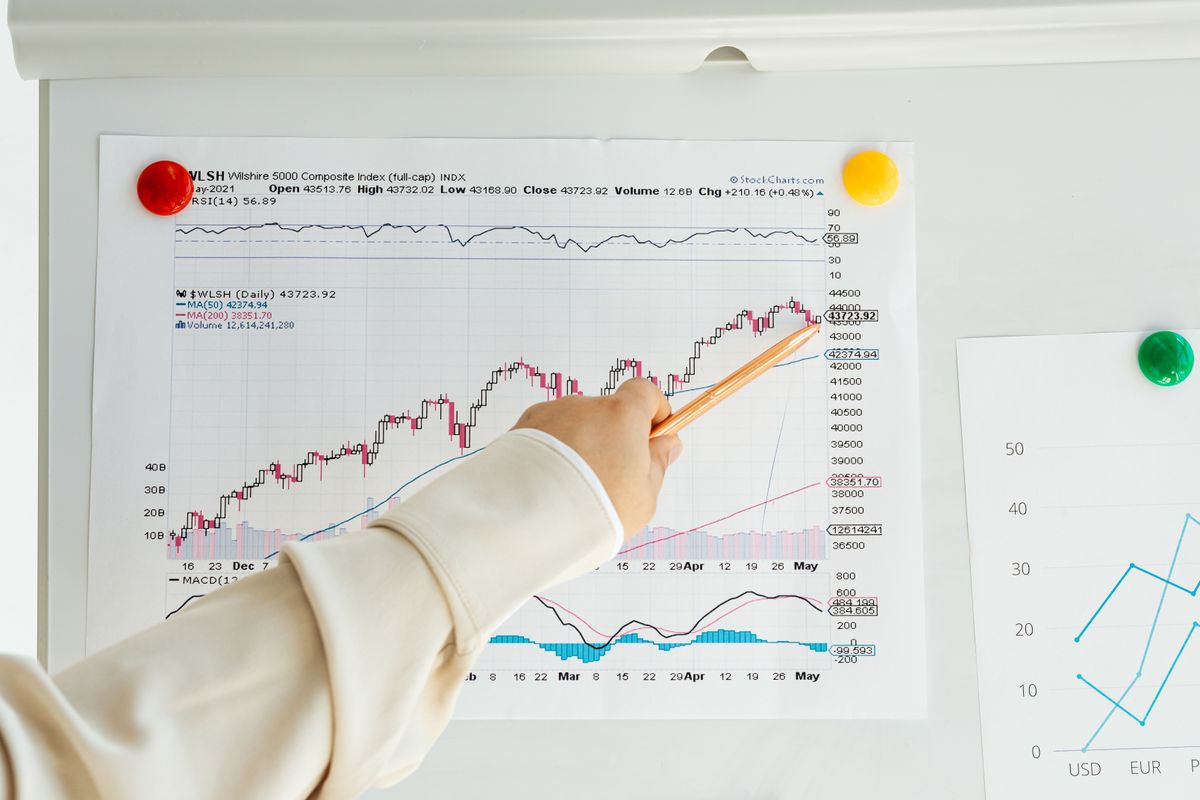
AI model networks visualised — open-weight models are now a cost-effective alternative to premium APIs. (Royalty-free image from Pexels)
Open-Weight AI Models in 2026: Singapore Developers' Smartest Cost Move
Introduction
The AI model landscape has shifted dramatically in 2026. While premium frontier models like GPT-5.5 (released April 2026) and Claude Fable 5 command headlines and premium pricing, a quieter revolution has been unfolding in the open-weight space. Recent demonstrations — including the Echo project achieving "Fable-level results at 1/3 the cost using open-weight models" — prove that open-weight AI models can now compete with the best proprietary systems. For Singapore developers navigating tight margins, rising cloud costs, and the city-state's aggressive AI ambitions, this represents a strategic opportunity that's too significant to ignore.
With Microsoft's US$5.5 billion Singapore AI infrastructure investment fueling local cloud capacity, and NTU making AI literacy mandatory from August 2026, the infrastructure and talent for open-weight AI adoption in Singapore have never been more accessible.
Why Open-Weight AI Models Matter
The Cost Advantage Is Real
The headline numbers from the Echo project tell a compelling story: equivalent performance to Claude Fable 5 at roughly one-third the inference cost. But this isn't a one-off outlier. The economics of open-weight models fundamentally change the calculus for teams building AI-powered applications. No per-token API fees, predictable scaling costs, no vendor lock-in, and — crucially for Singapore — Microsoft's expanding local data centres reduce latency and data egress costs for developers running open models on SG-based infrastructure.
For Singapore's fintech sector, handling sensitive financial data under MAS and PDPA regulations, running inference locally on open-weight models means sensitive data never leaves your controlled environment. That's a compliance win wrapped in a cost saving.
Model Complementarity: The Hidden Superpower
A surprising finding from the Echo project is how complementary open-weight models can be. As the developer noted: "A model that is clearly weaker overall can still be extremely useful on particular problems or as part of a combination."
This is the real unlock. Instead of finding one best model for all tasks, teams can route tasks to specialised models, combine outputs from multiple models for higher quality, and scale compute adaptively. Singapore developers already working with multi-model setups — as covered in the Singapore Developers' 2026 AI Toolkit — can extend this pattern by incorporating open-weight models as cost-efficient alternatives for sub-tasks.
Building Your AI Toolkit in Singapore
Infrastructure and Model Selection
Microsoft's US$5.5 billion investment in Singapore cloud and AI infrastructure (2024-2029) is a game-changer for open-weight model deployment. Local data centres mean lower latency, reduced egress costs, and easier compliance readiness for PDPA and MAS regulations. For teams needing GPU compute, RunPod and JarvisLabs both offer Singapore regions, while Lambda Labs expanded Asia-Pacific availability in 2026.
The open-weight landscape in July 2026 is diverse and rapidly improving. The strongest performers include GLM-5.2 (strong bilingual reasoning ideal for Singapore's multilingual workflows), Kimi K2.7 (excellent long-context capabilities for document analysis), Llama 4 from Meta (a strong general-purpose model with a large ecosystem), DeepSeek-V3 (excels at coding and logic tasks), and Qwen 2.5-72B (a solid all-rounder). The key insight from the Echo evaluation mix is that no single model dominates — a routing system that dynamically selects models per task consistently outperforms even the strongest individual model.
Security Is Non-Negotiable
The supply chain attack on Bitwarden's CLI tool — part of the ongoing Checkmarx campaign — serves as a critical reminder. Open-weight models themselves come with supply chain risks. Model provenance matters: always verify weights come from trusted sources like official Hugging Face repositories, check SHA256 checksums, and scan inference containers for vulnerabilities. Singapore's cybersecurity vigilance — including the recent blocking of 6 websites flagged for hostile information campaigns — reflects the seriousness of these threats.
For a deeper dive into securing your toolchain, see Securing Your Developer Toolkit.
Real-World Applications and Getting Started
Fintech, Traditional Sectors, and Education
For Singapore's MAS-regulated fintech sector, open-weight models offer a path to AI adoption without regulatory exposure. Local inference means AML screening models can run on-premises or in SG data centres, with full control over model versions and training data. This aligns with the regulatory trends covered in Singapore's New AI Data Rules — keeping data processing local while leveraging AI capabilities.
Beyond fintech, traditional sectors are also embracing AI. JTC developed an Evaluation Virtual Assistant for construction tender evaluation — a breakthrough in a traditionally conservative sector. AECOM built Singapore's first AI-enabled sustainable design optioneering ecosystem. Both examples use AI for structured decision-making, exactly the kind of task where open-weight models excel at eliminating per-call API costs while keeping sensitive government data secure.
On the education front, NTU's mandatory AI literacy programme (starting August 2026) with free Google AI tools signals Singapore's commitment to AI workforce readiness. Open-weight models lower the barrier further: students can experiment without API credits, educators can customise models for curriculum-specific tasks, and startups can prototype without upfront API costs. Singapore family offices eager to invest in AI — but lacking execution capability — can use open-weight models to build internal proof-of-concepts before committing to expensive proprietary solutions.
As of July 22, 2026, startup founders are urging the US government not to restrict Chinese open-weight AI models (source: Politico). This matters because many of the strongest open-weight options originate from Chinese labs. Singapore's position as a neutral tech hub makes it an ideal location for serving these models to Asia-Pacific users.
Challenges and Your Action Plan
While inference costs drop dramatically with open-weight models, you still need GPU compute. A 70B-parameter model requires at least 24GB VRAM for quantised inference (about $0.50-$2.00/hour on Singapore GPU rentals). The breakeven point depends on your usage volume — heavy users hitting 100K+ API calls per month will almost certainly save money self-hosting. Maintenance overhead is real but manageable, and with open-weight models, you control the upgrade timeline rather than being forced into vendor API changes.
Get started with this action plan:
- Pick one task your team currently pays for via API — content classification, document summarisation, or code review
- Deploy an open-weight model for that specific use case using a Singapore-based GPU provider
- Measure the quality difference — track accuracy, latency, and total cost over a week
- Scale from there — expand to more tasks once you've validated the approach
Chances are, like the Echo team discovered, you'll find the gap narrower than expected and the cost savings substantial. Singapore's AI advantage has never been about building the biggest model. It's about deploying the right tools efficiently. Open-weight models are now a critical part of that toolkit.
Disclaimer: This article is for informational purposes only and does not constitute financial or investment advice. AI tools and models mentioned may have changed since publication. Always verify current capabilities and pricing before making decisions.
FAQ
Q: Are open-weight AI models as good as proprietary ones like GPT-5.5 or Claude Fable 5? A: For specific tasks, yes. The Echo project demonstrated that a pool of open-weight models can match Claude Fable 5's aggregate performance at roughly one-third the inference cost. No single open-weight model beats the frontier models across all tasks, but intelligent routing and ensembling narrows the gap significantly.
Q: What infrastructure do I need to run open-weight models in Singapore? A: You need GPU compute — either rented (Azure, RunPod, Lambda Labs all have Singapore regions) or self-hosted. A model like Llama 4 (70B) requires at least 24GB VRAM in quantised mode. Expect costs of $0.50-$2.00/hour for adequate GPU capacity in Singapore.
Q: Which open-weight models work best for Singapore-specific use cases? A: GLM-5.2 offers strong bilingual (Chinese-English) performance, making it ideal for Singapore's multilingual context. DeepSeek-V3 excels at coding tasks. Kimi K2.7 has excellent long-context capabilities for document analysis. The best approach is to test multiple models and route tasks to the strongest performer.
Q: Is it safe to download and use open-weight AI models? A: Yes, with precautions. Only download from trusted sources like official Hugging Face repositories. Verify SHA256 checksums. Scan inference containers for vulnerabilities. This is especially important following supply chain attacks like the Bitwarden CLI compromise.
Q: Will open-weight models get shut off due to US-China tensions? A: This is uncertain. As of July 2026, startup founders are actively urging the US not to restrict Chinese open-weight models. Singapore's neutral position provides more stability than most locations, but developers should stay informed about regulatory developments.