Browsing Category "SSB"

Search This Blog

Powered by Blogger.

Pages

Browsing "Older Posts"

Browsing Category "SSB"

Building a Singapore Government Bond Ladder in July 2026: T-Bills, SSBs, and SGS Bonds

By TY → Thursday, July 2, 2026
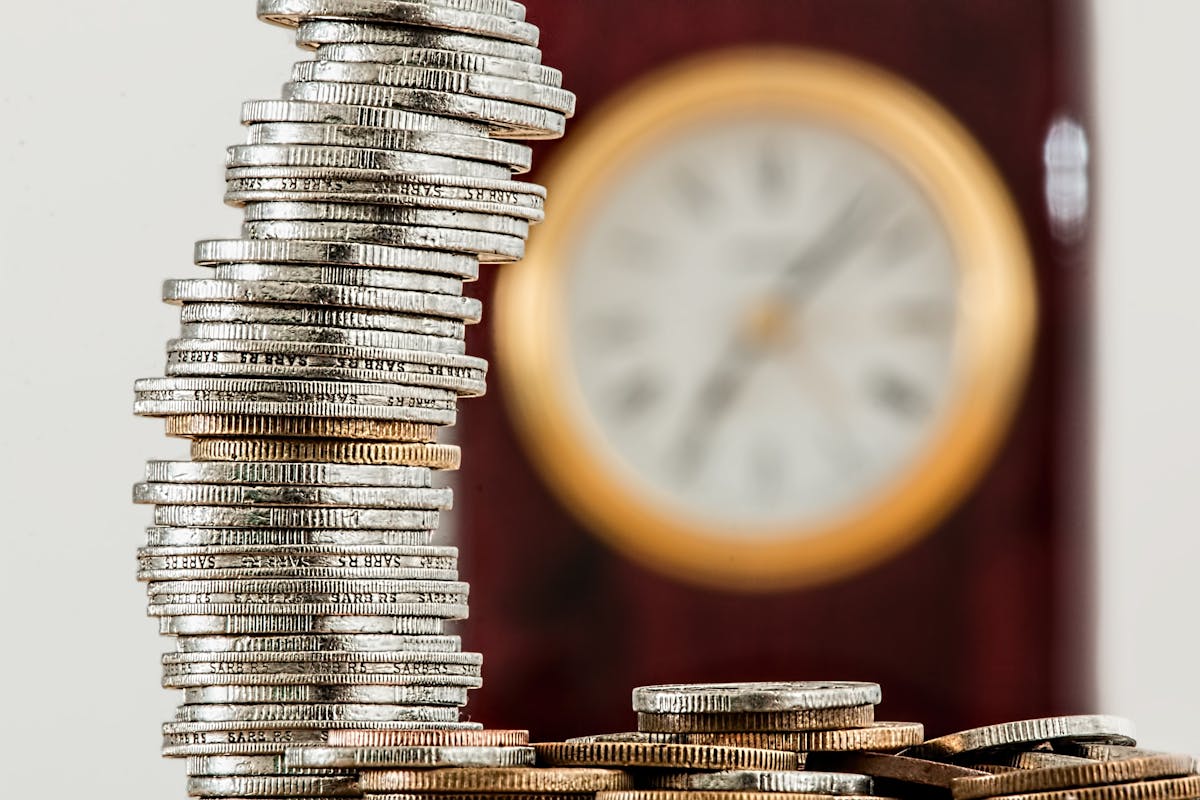
Singapore dollar notes and coins representing government bond ladder investment strategy

Building a Singapore government bond ladder with T-Bills, SSBs, and SGS bonds in July 2026. (Royalty-free image from Pexels)

Not financial advice | Disclaimer: This article is for informational and educational purposes only. It does not constitute financial advice. Please consult a licensed financial adviser before making investment decisions. Past performance is not indicative of future results.


Building a Singapore Government Bond Ladder in July 2026: T-Bills, SSBs, and SGS Bonds

Most Singapore investors think of T-bills and Singapore Savings Bonds (SSBs) as competing products — pick your favourite government-backed instrument and go all in. But the real opportunity lies in using all three SGS instruments together as a cohesive bond ladder.

In July 2026, the landscape offers an unusually clear set of choices. The latest 6-month T-bill auction (BS26113X) cut-off at 1.50% p.a. on 2 July 2026, up from 1.47% in mid-June. The August 2026 SSB (SBAUG26) offers a 2.06% p.a. 10-year average return, stepping up from 1.46% (Year 1) to 2.72% (Year 10). And the most recent 5-year SGS bond auction (NX21100N, 26 June 2026) landed at 1.75% p.a.

Each serves a distinct purpose. Stacked together, they form a government bond ladder — a strategy that delivers liquidity, term-matched returns, and optionality across your portfolio. This builds on our Singapore T-Bills Yield Analysis 2026 and the T-Bills vs SSB July 2026 guide.

Why Build a Government Bond Ladder with T-Bills, SSBs and SGS Bonds

A bond ladder means holding bonds with staggered maturities so portions mature regularly — giving you constant cash access while the rest earns higher returns. In July 2026, the yield curve is positively sloped (longer terms pay more), which is the normal, healthy configuration.

Yields have been trending upward since February (when 6-month T-bills hit 1.36%), and the current trajectory supports a phased approach. Short rungs let you reinvest at potentially higher rates, while long rungs lock in today's premium. The SGS 6-month benchmark yield reached 1.49% on 2 July, suggesting room for further upside.

Each instrument compensates for the others' weaknesses:

  • T-bills offer liquidity but lower absolute returns
  • SSBs offer high long-term returns but build slowly (S$200k lifetime cap)
  • SGS bonds fill the middle — fixed semi-annual coupons at a meaningful premium to T-bills

For comparison with higher-risk alternatives, see our analysis of Singapore Dividend Stocks.

The Three Rungs Explained

Rung 1: 6-Month T-Bills — Cash Management

According to iLoveSSB.com auction data, the BS26113X auction on 2 July saw S$17.4 billion applied against S$8.7 billion offered — a bid-to-cover ratio of 2.00x. Non-competitive applicants received 100% allotment. The yield trajectory according to official MAS data: February 1.36%, steadily rising to July's 1.50%.

T-bills occupy the first 6-12 months of your ladder. They preserve capital with near-term liquidity. In a rising rate environment, every new auction captures higher yields. Use non-competitive bids for guaranteed allotment. Next auction: BS26114W on 16 July, then BS26115N on 30 July.

Rung 2: 5-Year SGS Bonds — Medium-Term Stability

The most recent 5-year bond (NX21100N, auctioned 26 June 2026) closed at 1.75% p.a. with semi-annual coupon payments. That's 25 basis points above T-bills and only 31 basis points below the SSB's 10-year average.

Why hold SGS bonds? They provide predictable semi-annual income (unlike T-bills which pay at maturity). If yields decline, your bond's market price rises. And a 5-year bond fills the gap between your 6-month T-bill and 10-year SSB. Buy at auction through DBS, OCBC, or UOB. See the MAS issuance calendar for upcoming issues.

Rung 3: SSBs — Long-Term Savings Growth

According to MAS's official announcement, SBAUG26 (closing 28 July 2026) offers a 10-year average return of 2.06% p.a. Year 1 starts at 1.46% and reaches 2.72% by Year 10. S$10,000 invested earns S$2,081.21 over 10 years. The step-up structure rewards patience, and penalty-free monthly redemptions mean this rung is never truly locked up.

Tax advantage: SSB interest is tax-exempt. Combined with SRS contributions (tax-deductible up to S$15,300/year), you get upfront tax relief plus tax-free returns.

How to Build Your SGS Bond Ladder

Here is a practical 3-rung implementation with S$50,000:

  • Short rung (S$10,000, 25%): Apply for the next T-bill auction via non-competitive bid. Reinvest every 6 months.
  • Medium rung (S$15,000, 30%): Buy the next 5-year SGS bond at auction. Hold for semi-annual coupons at 1.75%.
  • Long rung (S$25,000, 50%): Apply for SBAUG26 before 28 July 2026. Add to this position monthly.

Rebalancing: Every six months (when your T-bill matures), reassess the yield curve. If SSB rates climb above 2.20%, shift some T-bill capital into the long rung. If short-term rates climb faster, keep more in T-bills.

Using CPF OA and SRS: Both can invest in T-bills and SSBs via CPFIS. However, note that CPF OA earns 2.5% base rate, so investing OA in T-bills at 1.50% doesn't make sense. SSBs at 2.06% average and SGS bonds at 1.75% are worth considering.

Key Dates for H2 2026

  • 16 Jul 2026 — T-bill BS26114W
  • 28 Jul 2026 — SBAUG26 closing
  • 30 Jul 2026 — T-bill BS26115N
  • 13 Aug 2026 — T-bill BS26116V
  • 27 Aug 2026 — T-bill BS26117A

Yield outlook: T-bill yields are in a gradual recovery phase. With the US Federal Reserve maintaining its cautious stance and MAS keeping the SGD NEER policy band steady, short-term SGS yields are likely to hover in the 1.40–1.70% range through H2 2026.

Frequently Asked Questions

Q: Can I build a bond ladder with less than S$10,000?
A: Yes. T-bills require S$1,000 minimum (non-competitive bid), SSBs require S$500, and SGS bonds typically have a S$1,000 minimum at auction. Even S$5,000 can start a 3-rung ladder.

Q: What if I need to sell an SGS bond before maturity?
A: You can sell in the secondary market, but you may incur a capital loss if yields have risen since purchase. SSBs avoid this risk with penalty-free monthly redemptions.

Q: Are SGS bonds better than SSBs for a 5-year hold?
A: At current rates, the 5-year SGS at 1.75% compares closely with the SSB's Year 5 interest rate. The SSB's optionality (early exit) usually wins for retail investors.

Q: Should I use SRS funds for my bond ladder?
A: Generally yes, especially for SSB and SGS rungs. Upfront tax deduction plus tax-exempt interest creates meaningful savings.

Q: How does the US Federal Reserve affect Singapore T-bill yields?
A: Singapore yields follow US Treasury trends but MAS's exchange-rate-centred policy provides a buffer. SGS yields trade 50-100 basis points below equivalent US Treasuries.

Conclusion and Next Steps

A Singapore government bond ladder is straightforward. You need bank internet banking access, a CDP account, optionally CPFIS/SRS, and a calendar with auction dates.

The July 2026 numbers make the case:

  • T-bills at 1.50% for short-term cash
  • SGS bonds at 1.75% for medium-term fixed income
  • SSBs averaging 2.06% for long-term flexible savings

None of these will make you rich overnight. But together, they provide a capital-guaranteed, tax-free foundation for your Singapore-dollar portfolio.

Take action now: The next T-bill auction is 16 July 2026. SBAUG26 closes 28 July 2026. Log into your DBS, OCBC, or UOB internet banking and set up your applications this week. Pick your rungs and start building.


Disclaimer: This article is for educational purposes only and does not constitute financial advice. Please consult a licensed financial adviser for advice tailored to your personal situation.

Data sources: MAS.gov.sg and iLoveSSB.com. All auction results and rates as of 2 July 2026.

Singapore T-Bill at 1.50% and SSB at 2.06%: July 2026 Comparison Guide

By TY →
Singapore dollar notes and coins representing savings and investment

Singapore Savings Bonds and T-Bills comparison for July 2026. (Royalty-free image from Pexels)

Singapore T-Bill at 1.50% and SSB at 2.06%: July 2026 Comparison Guide


Not financial advice | Disclaimer: This article is for informational and educational purposes only. It does not constitute financial advice. Please consult a licensed financial adviser before making investment decisions. Past performance is not indicative of future results.


Breaking Down the Latest T-Bill and SSB Returns

The latest Singapore 6-month Treasury Bill (T-bill) auction on 2 July 2026 delivered a cut-off yield of 1.50% p.a. — the highest level since April and a clear uptick from 1.47% just two weeks prior. At the same time, the August 2026 Singapore Savings Bond (SBAUG26) offers a 10-year average return of 2.06% p.a. with a step-up structure reaching 2.72% by Year 10.

For Singapore investors sitting on idle cash, these two government-backed instruments present a compelling choice. This builds on our Singapore T-Bills Yield Analysis 2026 and the T-Bills vs Fixed Deposits comparison from June — both remain relevant but need updating with the latest auction results.

T-Bill Auction: BS26113X (2 July 2026)

The 6-month T-bill auction attracted S$17.4 billion in applications against S$8.7 billion offered, yielding a bid-to-cover ratio of 2.00x. While healthy, this was lower than the 2.36x seen in the previous BS26112T auction on 18 June.

Key auction results:

  • Cut-off yield: 1.50% p.a. (up 3 basis points from 1.47% on 18 June)
  • Cut-off price: S$99.252 per S$100 face value
  • Median yield: 1.45% p.a.
  • Average yield: 1.38% p.a.
  • Non-competitive applications: 100% allotted
  • Competitive applications at cut-off: ~45.46% allotted
  • Next auction: BS26114W on 16 July 2026

The 2026 yield trajectory so far:

The 6-month cut-off yield has edged higher since its low of 1.36% in February. After hovering between 1.40–1.48% from April through June, the July auction finally broke past the 1.50% barrier. The 6-month SGS benchmark yield reached 1.49% on 2 July, confirming the upward trend.

This gradual recovery reflects market expectations around interest rates globally. While the near-4% yields of late 2023 are unlikely to return in this cycle, yields above 1.50% represent attractive risk-free returns in the current Singapore dollar environment, especially with inflation remaining moderate.

T-Bills vs SSB: Which Is Right for You?

The perennial question for Singapore retail investors now has fresh data to inform the answer.

Singapore Savings Bonds (SBAUG26)

Announced on 1 July 2026, SBAUG26 offers:

  • 10-year average return: 2.06% p.a.
  • Year 1 interest: 1.46% (comparable to T-bills)
  • Year 10 interest: 2.72% (step-up structure)
  • S$10,000 invested over 10 years: S$2,081.21 total interest
  • Issue size: S$300 million
  • Closing date: 28 July 2026

The previous issue (SBJUL26) was under-subscribed, suggesting that investors may be waiting for higher rates. The next SSB (SBSEP26) is projected to offer an even higher 10-year average return.

Head-to-Head Comparison

Feature6-Month T-bill (BS26113X)SSB (SBAUG26)
Return1.50% p.a. (fixed, 6 months)1.46% (Y1) to 2.72% (Y10), avg 2.06%
Tenor6 monthsUp to 10 years
LiquidityMust hold to maturityRedeemable monthly, no penalty
Min. investmentS$1,000 (non-competitive)S$500
Max. individual limitNoneS$200,000
CPF OA eligibleYesYes
SRS eligibleYesYes

When T-Bills Win

T-bills are the better choice when you need the money within 6–12 months, want to avoid long-term commitment, or are parking cash ahead of other investment opportunities. They also let you ride a rising rate environment — if yields keep climbing, you can reinvest at higher rates every six months.

When SSB Wins

SSBs work better for long-term, safe income. The step-up structure rewards patience: hold for 10 years and your effective yield reaches 2.06% p.a., significantly above T-bill rates. The ability to redeem any month without penalty is a powerful feature that conventional bonds don't offer. SSBs are also excellent for building a retirement income ladder. For comparison with higher-risk options, check our analysis of Singapore REITs vs US Cash ETFs.

Practical Strategies with SRS and CPF OA

One of the most powerful moves Singapore investors can make is using SRS funds and CPF Ordinary Account savings to invest in T-bills and SSBs.

SRS + T-bills: Double Tax Benefit

With SRS contributions being tax-deductible (up to S$15,300 per year), using SRS funds to buy T-bills creates a dual advantage:

  1. Upfront tax savings on the contribution year
  2. Tax-exempt returns from the T-bill (SGS interest is tax-free)
  3. Only 50% of SRS withdrawals are taxable at retirement

A S$15,300 SRS contribution invested in T-bills at 1.50% would yield approximately S$114.75 in interest over six months — entirely tax-free, stacked on top of the upfront tax relief.

CPF OA + T-bills

CPF OA savings earn a base rate of 2.5% p.a., which still outpaces 1.50% T-bill yields. However, for OA funds exceeding the first S$20,000, investing in T-bills can be worthwhile if you expect rates to climb further or want to diversify within your CPF investment portfolio.

The 5-year SGS bond (NX21100N, auctioned on 26 June 2026 at 1.75% p.a.) offers a middle ground for those considering longer-term CPFIS investments. You can find full details of SGS bonds and SSBs on the MAS bonds and bills page.

H2 2026 Outlook, Auctions, and Tips

Upcoming Auctions

T-bill auctions to watch: BS26114W (16 Jul), BS26115N (30 Jul), BS26116V (13 Aug), BS26117A (27 Aug). SSB deadlines: SBAUG26 closes 28 Jul 2026. The next SSB (SBSEP26) is projected to offer an even higher 10-year average return.

Rate Outlook

T-bill yields appear to be in a gradual recovery phase. With the US Federal Reserve maintaining a cautious stance on rate cuts and MAS keeping the SGD NEER policy band steady (per MAS's official statements), short-term SGS yields are likely to hover in the 1.40–1.70% range through H2 2026. Key factors include US Fed decisions, MAS's October 2026 statement, and Singapore's GDP growth.

Quick Tips for Applicants

  1. Use non-competitive bids — retail investors are guaranteed 100% allotment at the cut-off yield
  2. Set up SRS and CPFIS accounts early — don't wait until auction week
  3. Diversify between T-bills and SSB — use T-bills for short-term cash and SSB for long-term savings
  4. Compare with high-yield savings accounts — OCBC 360, UOB One, and CIMB FastSaver may offer competitive rates for smaller amounts, though T-bills lock in your rate for the full term without needing to meet monthly criteria

Ready to act? The next T-bill auction is 16 July 2026, and SBAUG26 closes on 28 July 2026. Apply through DBS/POSB, OCBC, or UOB internet banking, or your brokerage account.

Frequently Asked Questions

Q: What's the minimum to invest in Singapore T-bills?
A: The minimum non-competitive application is S$1,000. Competitive bids have no stated minimum but are typically used by larger investors.

Q: Can I lose money on T-bills?
A: If bought at auction and held to maturity, T-bills are fully backed by the Singapore Government (AAA-rated). Selling in the secondary market before maturity could result in a loss if rates have risen.

Q: Are T-bill returns taxable?
A: No. Interest from Singapore Government Securities (T-bills and SSBs) is tax-exempt.

Q: T-bills at 1.50% or SSB at 2.06% — which is better?
A: It depends on your holding period. Need the money within 6–12 months? T-bills. Can commit 5–10 years? SSB's step-up structure delivers higher long-term returns with the flexibility to redeem early.

Q: Can I use CPF OA funds for T-bills?
A: Yes, through the CPF Investment Scheme (CPFIS). Interest earned goes back into your CPF OA.

Conclusion and Next Steps

The July 2026 T-bill auction at 1.50% and SSB SBAUG26 at 2.06% average return give Singapore investors two excellent risk-free options. While neither matches the eye-catching yields of late 2023, both offer meaningful real returns in today's moderate inflation environment — backed by the Singapore Government's AAA credit rating.

The smartest approach? Use both. Pair short-term T-bills for cash management with a long-term SSB ladder for retirement savings. This barbell strategy gives you liquidity, safety, and gradual step-up returns across your portfolio.

Ready to act? The next T-bill auction is 16 July 2026, and SBAUG26 closes on 28 July 2026. Apply through DBS/POSB, OCBC, or UOB internet banking, or your brokerage account.


Disclaimer: This article is for educational purposes only and does not constitute financial advice. Please consult a licensed financial adviser for advice tailored to your personal situation. The author may hold positions in instruments discussed.