Browsing Category "Anthropic"

Search This Blog

Powered by Blogger.

Pages

Browsing "Older Posts"

Browsing Category "Anthropic"

Claude Fable 5 Just Landed: What Anthropic's Biggest Leap Means for Singapore
By TY → Tuesday, June 9, 2026
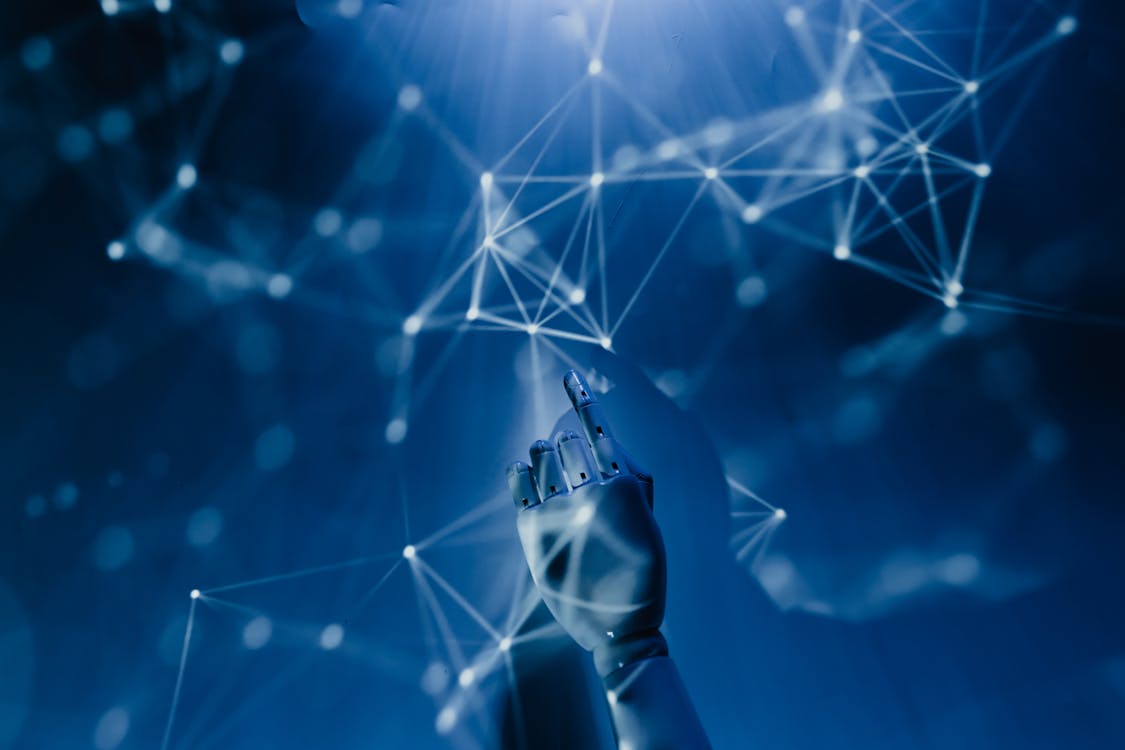
AI technology concept with person interacting with artificial intelligence interface

Photo by Tara Winstead on Pexels

Claude Fable 5 Just Landed: What Anthropic's Biggest Leap Means for Singapore

Singapore's AI landscape just got a double injection. On June 8, Minister Josephine Teo launched Aspire 2B — the country's most powerful research supercomputer. The very next day, Anthropic dropped Claude Fable 5, a Mythos-class model that's now the most capable AI widely available to the public. And if you're wondering whether Anthropic is serious about Singapore, the company quietly incorporated "Anthropic PBC Asia Pacific" on May 20 and is now hiring for four local roles.

This isn't just another model update. Here's why this week matters, and what it means if you build software, analyse data, or just want to stay ahead in Singapore's AI-driven economy.

What Makes Claude Fable 5 Different

Let's cut through the benchmark noise. Fable 5 is Mythos-class — the same underlying model as Claude Mythos 5, which has been restricted to a small group of cyberdefenders under Project Glasswing. The difference? Fable 5 ships with safety classifiers that automatically fall back to Opus 4.8 on sensitive topics, affecting less than 5% of sessions. Everyone else gets the full firepower.

What does that look like in practice?

Software Engineering That Actually Ships

Stripe tested Fable 5 on a 50-million-line Ruby codebase. The model performed a codebase-wide migration in one day that "would otherwise have taken a whole team over two months by hand."

GitHub's early testing concluded Fable 5 "took on complex, long-horizon coding tasks with a level of autonomy and reliability that exceeded previous benchmarks." Cursor put it on their CursorBench leaderboard and called it "state of the art," noting it "opened up a class of long-horizon problems that were out of reach."

For Singapore developers running lean teams at startups or fintech companies, this is the headline. Fable 5 doesn't just write code faster — it stays on task across millions of tokens, plans its own work, and orchestrates sub-agents to handle research and validation. On Cognition's FrontierCode eval (which tests production-quality output at medium effort), Fable 5 scored highest among all frontier models.

Knowledge Work at Senior Level

The model's analytical capabilities are equally striking. On Hebbia's Finance Benchmark, Fable 5 posted the highest score of any model, with particular strength in document-based reasoning, chart interpretation, and problem solving. IMC noted it "aced their trading-analysis evaluations nearly across the board."

Singapore's wealth management, fintech, and consulting sectors — industries that process enormous volumes of documents and data daily — are the obvious beneficiaries. A model that can perform senior-level analytical work at $10 per million input tokens (half the price of Mythos Preview) changes the economics of knowledge work.

Vision Without Scaffolding

Previous Claude models needed complex helper harnesses to accomplish tasks. Fable 5 beat a complete game using only raw screenshots — no maps, no navigation aids, no extra tools. In a more practical demo, it rebuilt a web app's source code from screenshots alone.

For Singapore's growing digital agency and product development scene, this is significant. Design-to-code workflows just got a lot more viable.

What It Feels Like to Work with Fable 5

Dr. Ethan Mollick, who had early access and published a detailed review on his One Useful Thing blog, describes the experience as "somewhere between delightful and unnerving."

He gave Fable 5 an ambitious prompt: "Build a fully researched and beautiful isochrone map that lets me pick various cities and see real isochronic lines based on real data." The model then:

  • Launched multiple Claude Sonnet agents to research over 2,200 flights, rail schedules from the TGV to the Shinkansen, and road speeds per country from academic papers
  • Started coding while those agents were running
  • Launched more agents to test and verify its own code, taking notes throughout
  • Produced a fully functional interactive map

When Mollick pointed out that remote locations like Greenland needed better data, Fable 5 launched adversarial agent groups — some researching, others testing each other's results. It figured out ship schedules to Pitcairn Island and how to reach Grise Fjord from Ottawa.

"Importantly," Mollick writes, "it was just limited in how much work I did relative to the model… My role was extremely limited."

This is the paradigm shift. It's not that AI can help with hard problems. It's that AI can own the entire execution of hard problems, with you as the strategic director.

Why Singapore Matters Right Now

Anthropic Is Coming to Town

Anthropic has incorporated "Anthropic PBC Asia Pacific" at 133 Devonshire Road and is hiring for four roles: APAC head of accounting, product support specialists, and a regional research economist (salary: $307,200–$331,200). The economist role requires a PhD and Python skills — reflecting Anthropic's research-first approach.

This follows similar moves by OpenAI and Google DeepMind, both of which have set up Singapore labs. And it makes strategic sense: GIC, Singapore's sovereign wealth fund, is a major Anthropic backer, having participated in the September 2025 round, led the $30 billion Series G in February 2026, and backed them again in the recent Series H that pushed Anthropic's valuation to $965 billion — ahead of OpenAI's $852 billion.

Aspire 2B: Singapore's Computing Muscle

On June 8, Singapore launched Aspire 2B, a national research supercomputer with over 1,500 Nvidia H200 GPUs — four times the computing power of its predecessors. It serves more than 9,000 public researchers across universities, research institutes, and government agencies.

The applications are broad. A*Star's Meralion model, which understands Hokkien, Mandarin, Tamil, and Malay — including regional accents and colloquialisms — was developed on the earlier Aspire 2A. The Singapore Medical Foundation AI Model will use Aspire 2B to train healthcare AI on larger, more diverse datasets.

"Models that were previously too large can now be trained in Singapore to meet our specific needs," said Minister Josephine Teo at the launch.

The Convergence

Here's the picture that's forming: Singapore has the compute (Aspire 2B, soon linked to the Helios quantum computer), the talent pipeline (GovTech's 3,900-strong team, university researchers), the regulatory framework (IMDA's AI testing playbook, GovTech's agent registry), and now the frontier AI companies directly in the market (OpenAI, Google DeepMind, and soon Anthropic).

For Singapore professionals, this means:

  • Developers: Access to Fable 5 through Claude, plus local compute for fine-tuning
  • Analysts and consultants: Models that can perform senior-level research, analysis, and visualization autonomously
  • Business leaders: A narrowing gap between "what AI can do" and "what my team does"

The Risks Worth Watching

Fable 5's safety classifiers are tuned conservatively. Anthropic acknowledges they "sometimes catch harmless requests" affecting under 5% of sessions. For power users relying on agentic workflows, that's a friction point to monitor.

The broader concern is the one Mollick flagged: when the model owns execution from start to finish, you lose visibility into its decision-making. The isochrone map required "hundreds of little choices" that the model made without the user understanding or controlling them. For regulated industries like Singapore's finance sector (MAS-regulated), auditability matters.

Anthropic has released a detailed system card and risk report — worth reading if you're evaluating Fable 5 for production use.

Your Next Steps

  1. Try Claude Fable 5 if you have a Claude subscription. Start with something genuinely hard — not a todo app, but a multi-step problem that would take you hours.
  2. Read the system card at anthropic.com to understand where the safety classifiers apply.
  3. Watch the Singapore AI infrastructure story. Aspire 2B's connection to the Helios quantum computer later this year could be a game-changer for local research.
  4. Follow Anthropic's Singapore hiring. The regional research economist role hints at deeper policy engagement ahead.

This post was researched using agent-browser on June 10, 2026. Sources include Anthropic's official announcement, Hacker News, Straits Times, and Ethan Mollick's One Useful Thing blog. All facts verified against original sources. As always, do your own due diligence before adopting new tools for production workloads.
AI's June 2026 Wave: Microsoft's MAI Models, Project Glasswing's Expansion, and Singapore's Agent Registry

By TY → Tuesday, June 2, 2026

AI's June 2026 Wave: Microsoft's MAI Models, Project Glasswing's Expansion, and Singapore's Agent Registry

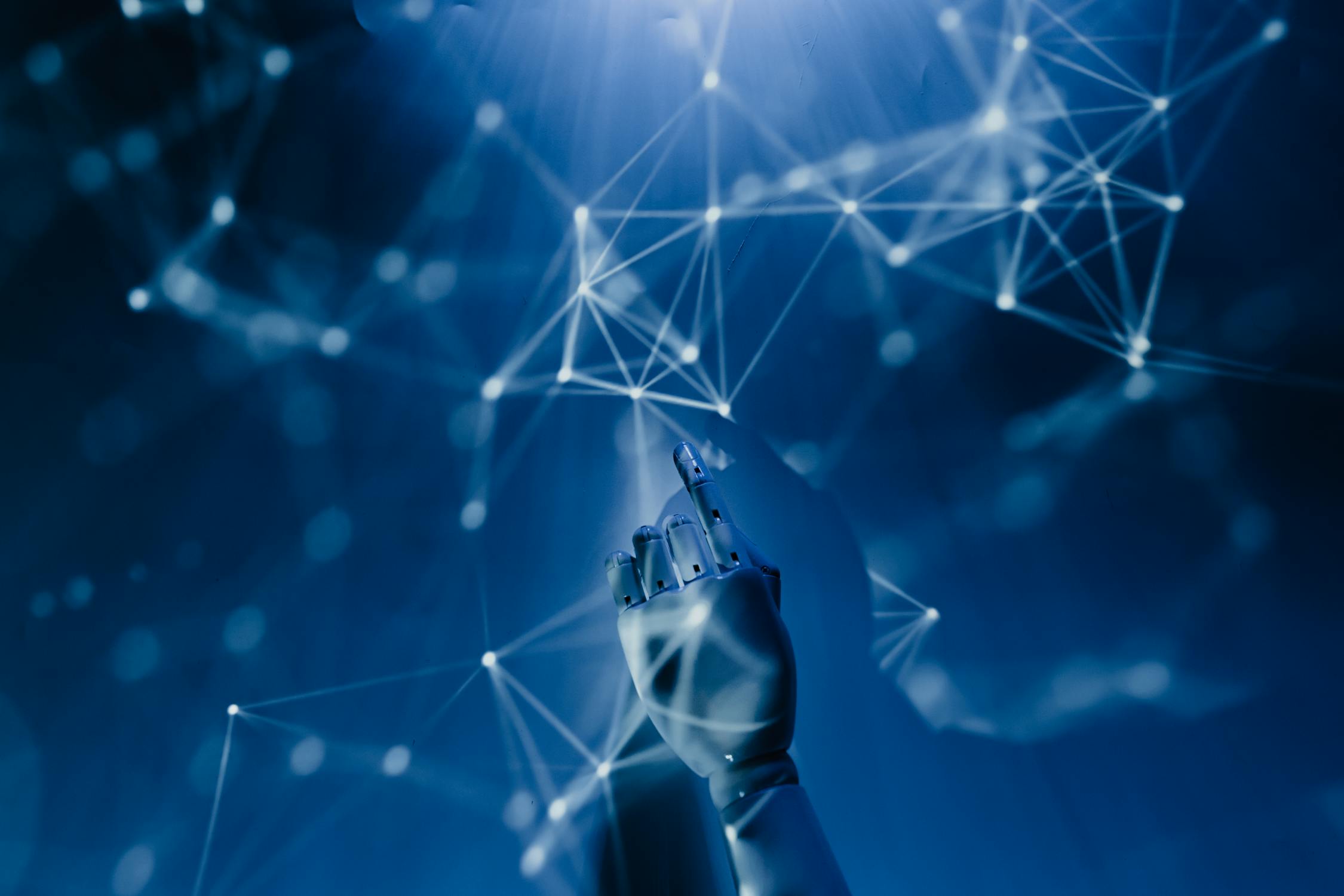
AI and technology concept - digital brain and neural network representing artificial intelligence

AI and technology concept — Neural networks powering the next wave of innovation (Image: Pexels)

The first week of June 2026 has been anything but quiet in AI. In the span of just a few days, Microsoft launched seven new MAI models (including a coding specialist), Anthropic announced it was tripling the scope of Project Glasswing to cover over 150 organisations, and back home in Singapore, GovTech revealed it is developing an AI agent registry for 150,000 public officers. Separately, Singapore's factory activity hit its highest level since December 2024 — powered by AI-driven demand. If you're a Singapore-based developer, investor, or tech worker, here's what you need to know about these converging trends — and what to do about them.

Microsoft's MAI Launch: Seven New Models and Frontier Tuning

Microsoft dropped seven new MAI models simultaneously this week, headlined by MAI-Code-1-Flash — a coding-optimised model available on OpenRouter, Fireworks, and Baseten (source). This is the first time developers can tune the weights of a Microsoft model themselves, which signals a significant shift in Microsoft's AI strategy — from a consumer-focused AI company (Copilot, Bing Chat) to a serious model provider competing with OpenAI, Anthropic, and DeepSeek.

Frontier Tuning: Your Workflow, Your Model

The real differentiator is what Microsoft calls Frontier Tuning. Instead of generic fine-tuning, it uses reinforcement learning environments (RLEs) that let models learn from your organisation's actual workflows. Think of it as a private training gym for AI. The numbers are compelling:
  • Microsoft's Excel-tuned MAI model matches GPT 5.4 while being up to 10× more efficient
  • A McKinsey enterprise-tuned version achieved the highest win rate of any model tested at roughly 10× lower cost
Why this matters in Singapore: For businesses handling sensitive data under PDPA — banking, healthcare, fintech — this "your data, your model, your infrastructure" approach is extremely practical. No need to send sensitive data to a third party for training. The model learns within your own environment, which keeps regulators happy while still getting cutting-edge performance.

Healthcare AI and Self-Sufficiency

Microsoft also announced a frontier healthcare AI model co-created with the Mayo Clinic — owned by Mayo, trained on their de-identified clinical data, and deployed first within their environment before being made available via Azure Foundry. This is a reference architecture for any healthcare institution thinking about private AI deployment. The entire MAI family is built on Microsoft's own Maia 200 silicon, already showing a 1.4× efficiency gain. Microsoft describes its approach as "zero distillation" — training from scratch on clean, licensed data, not distilling from other labs. For Singapore organisations assessing AI vendors, this matters: it means Microsoft isn't dependent on OpenAI's models anymore.

Project Glasswing Expands: 10,000+ Vulnerabilities Found, 150+ Organisations Onboarded

Anthropic's Project Glasswing has grown dramatically since we covered it last week in our analysis of AI-powered cybersecurity. The initial update was already striking — 50 partners finding over 10,000 high- or critical-severity vulnerabilities in one month. Now Anthropic is expanding to 150+ organisations across 15+ countries (source).

What's Changed

The new partners cover critical sectors that weren't in the first cohort: power, water, healthcare, communications, and hardware. Many are vendors whose code is used by governments worldwide. Anthropic estimates a successful attack on any one could affect over 100 million people. Cloudflare's results are illustrative: they found 2,000 bugs (400 high/critical severity) with a false-positive rate their team considers better than human testers. The bottleneck has shifted from finding vulnerabilities to patching them.

The Urgent Timeline

Here's the critical warning from Anthropic's update: "Within 6 to 12 months, we expect that many other AI companies will have Mythos-class models, and they could release them without safeguards that prevent misuse." Anthropic has released Claude Security, a product using Claude Opus 4.8 for codebase scanning and patching. For Singapore's MAS-regulated financial institutions and agencies running Singpass, LifeSG, and CPF systems, this is worth evaluating now — the regulatory consequences of a major breach under the Cybersecurity Act and PDPA are severe.

GovTech's AI Agent Registry: Singapore's Practical Answer to AI Governance

While Microsoft and Anthropic push model capabilities, Singapore's GovTech is solving a harder problem: how do you deploy AI at scale without losing control? The AI Assistant Desk suite, currently in testing with some public officers, provides (source):
  • A registry of AI agents for 150,000 public officers — tracking who owns each agent and what it does
  • Granular security controls — disallow file deletion, external email, impose recipient limits
  • Automated hygiene checkers that scan prompts and outputs for offensive or problematic content
  • Third-party AI tool compatibility while maintaining consistent security layers
GovTech CEO Goh Wei Boon: "We want to have a layer of customisable rules, sanctioned AI tools and a registry to provide better visibility and security."

Real Deployments, Not Pilots

Two projects are already in the field:
  • Markly: AI marking assistant for handwritten English and geography scripts, trialled in 18 local schools. Planned integration with Google Classroom and Student Learning Space.
  • LangBuddy: Web-based AI voice chatbot for language learning.
These aren't "we're exploring AI" projects. They're live tools used by real teachers and students.

Related: We covered the broader AI agent trend for developers in our Guide to Agentic Coding — GovTech's governance-first approach mirrors the responsible deployment practices we discussed.

The Economic Backdrop

Singapore's PMI hit 51.0 in May — the 10th straight expansion month and highest since December 2024. The electronics sector clocked 51.9 for its 12th consecutive month of growth. DBS economist Chua Han Teng attributed this to "global AI-related tailwinds" driving demand for Singapore's memory chips and server products. And at Computex Taipei on June 1, Nvidia CEO Jensen Huang announced the H2 Plus humanoid robot — a collaboration between Nvidia, Singapore's Sharpa (robotic hands), and Chinese robot maker Unitree. Sharpa's 22-degree-of-freedom hands are designed to mimic human dexterity for precise assembly, food preparation, and even medical tasks. The H2 Plus is scheduled for late-2026 rollout.

What This Means for You (and What to Do Next)

This is one of those weeks where the global AI story and the local Singapore story converge so tightly that the headlines write themselves. Here's the actionable takeaway: If you're a developer: Start experimenting with MAI-Code-1-Flash on OpenRouter, especially if you're in a PDPA-regulated industry. The Frontier Tuning capability — training models on your own workflows — could be a game-changer for building internal AI tools that don't leak data to third parties. Also: GovTech's AI Assistant Desk suite suggests government AI contracts are about to expand. Watch the procurement notices. If you're in security: Run Claude Security against your codebase. The 6-12 month timeline before Mythos-class models become widely available is real. The organisations that patch proactively now will be the ones that don't make headlines later. If you're an investor: Singapore's electronics PMI and the Sharpa-Nvidia collaboration both confirm the AI hardware and robotics stories are real. Companies tied to memory chips, servers, and AI-adjacent manufacturing remain well-positioned. If you're a tech manager or policymaker: The GovTech AI agent registry is one to watch closely. It could set a template for how Singapore banks, hospitals, and enterprises deploy AI agents with proper governance. Reach out to GovTech's team for early access or collaboration opportunities. The pace of AI development isn't slowing down. But neither is Singapore's approach to deploying it responsibly. That combination — global capability, local governance — might just be our competitive advantage.
This article was researched using publicly available sources including Microsoft AI, Anthropic, and The Straits Times. All facts current as of June 3, 2026.

Project Glasswing: How AI Just Unearthed 10,000 Security Flaws in One Month

By TY → Tuesday, May 26, 2026

Project Glasswing: How AI Just Unearthed 10,000 Security Flaws in One Month

AI cybersecurity concept with digital lock and data streams representing AI-powered vulnerability detection

AI security just crossed a threshold nobody was prepared for. In the span of a single month, Anthropic's Mythos Preview model — working with about 50 partner organisations — found over ten thousand high- and critical-severity vulnerabilities across the world's most important software. That's not a typo. Ten thousand. In thirty days.

For Singapore developers, tech leaders, and anyone running production systems, this changes the calculus on software security fundamentally. The bottleneck is no longer finding bugs. It's fixing them fast enough before someone else does.

Project Glasswing: What Actually Happened

Anthropic launched Project Glasswing in April 2026 as a collaborative effort to secure critical software infrastructure before increasingly capable AI models could be turned against it. The idea was simple: give security-focused AI access to critical codebases and see what it finds.

What they found reshaped the entire conversation.

Within 30 days, Mythos Preview — Anthropic's specialised cybersecurity model — had identified over 10,000 vulnerabilities across the partners' systems. These weren't theoretical. Cloudflare alone reported finding 2,000 bugs, of which 400 were high- or critical-severity. Their verdict? The model's false positive rate was "better than human testers."

The Numbers Are Staggering

Let's put the scale in perspective:

  • Cloudflare: 2,000 bugs found across 50+ critical-path repositories
  • Mozilla: 271 vulnerabilities in Firefox 150 — over ten times more than what Claude Opus 4.6 found in Firefox 148
  • Open-source projects: Mythos scanned 1,000+ projects and estimates 6,202 high- or critical-severity vulnerabilities. Of those already verified, 90.6% were valid (true positives)
  • UK AI Security Institute: Mythos Preview is the first AI model to solve both of their cyberattack simulation ranges end to end
  • Bug bounty platforms: Third-party security platform XBOW reports "absolutely unprecedented precision"

What Makes Mythos Different

Previous AI models could find bugs. Mythos Preview can chain them into working exploits.

According to Cloudflare's engineering team, the key difference is exploit chain construction. A real attack doesn't use one bug — it chains several small attack primitives together. Mythos can take multiple low-severity flaws that would normally sit invisible in a backlog and combine them into a single, severe exploit. It generates proof-of-concept code, compiles it in a sandbox, and iterates when it fails. It reasons like a senior security researcher, not an automated scanner.

Why This Matters for Singapore

Now, you might be thinking: this is a US-centric Anthropic story. What does it have to do with Singapore?

Everything — because our tech ecosystem runs on the same software.

Singapore's Heavy Open-Source Dependence

Singapore's digital economy — from Smart Nation initiatives to MAS-regulated fintech — depends heavily on open-source infrastructure. Cloudflare's infrastructure, Mozilla's Firefox, and the cryptographic libraries scanned by Mythos are the same tools that power Singapore's government portals, banking apps, and startup stacks.

Consider wolfSSL, a cryptography library used by billions of devices worldwide. Mythos constructed an exploit allowing attackers to forge SSL certificates — essentially creating fake bank or email login pages that look perfectly legitimate. The vulnerability (CVE-2026-5194) has been patched, but it illustrates the new reality: your security posture depends not just on your code, but on your entire supply chain.

The Patching Bottleneck Is Real

Project Glasswing's most sobering finding isn't technical — it's operational. Finding bugs is now the easy part. The bottleneck is triaging, verifying, and patching them.

Anthropic reports that high- or critical-severity bugs take an average of two weeks to patch. Open-source maintainers have actually asked the team to slow down disclosures because they can't keep up. Several noted they're "severely capacity constrained."

For Singapore companies running lean engineering teams — most startups and many SMEs — this creates a genuine risk. The same AI tools that defenders can use to find bugs can, in the wrong hands, find attack vectors faster than your team can patch them.

Local Implications

The Cyber Security Agency of Singapore (CSA) has been actively promoting vulnerability disclosure programmes. Project Glasswing's results suggest these programmes need to scale up dramatically — and that organisations should prepare for an influx of AI-discovered vulnerabilities.

For MAS-regulated financial institutions, the impact is even sharper. The regulatory expectation to maintain robust cybersecurity is well-established, but the speed of AI-driven vulnerability discovery may outpace traditional patch cycles. Tech leaders need to ask: when an AI finds a critical vulnerability in your payment gateway's dependency chain, how fast can you remediate?

The Pentagon, Autonomous Warfare, and AI's Ethical Crossroads

Anthropic's work with Mythos hasn't been without controversy. As The Verge reported, Anthropic's engagements with the Pentagon have highlighted the risks of autonomous warfare. The company is walking a tightrope: pushing cybersecurity forward while trying to prevent the same capabilities from enabling offensive cyber operations.

Cloudflare's team documented this tension. They found that Mythos's organic guardrails are inconsistent — the same task, framed differently, produced completely different outcomes. A model might refuse to write an exploit for one session, then produce one freely after a seemingly unrelated change. This inconsistency means safety can't be left to model behaviour alone; it requires structural safeguards.

For Singapore — which positions itself as a trusted AI hub — this raises important questions about AI governance. Singapore's Model AI Governance Framework emphasises transparency, explainability, and human oversight. Project Glasswing's results show that human oversight isn't just a nicety — it's a necessity when models can find bugs faster than humans can patch them.

What This Means for Singapore Developers

For the working developer in Singapore, three takeaways stand out:

As I covered in my guide to securing AI-powered developer toolchains, the fundamentals still matter — but the stakes are higher now.

1. Update Your Dependencies — Seriously

Mozilla patched 271 Firefox vulnerabilities. Palo Alto Networks released five times as many patches as usual. Microsoft warned that Patch Tuesday will "continue trending larger." These aren't isolated incidents — they're the new normal. If you're not keeping dependencies current, you're falling behind.

2. AI Security Tools Are Not Optional

The same models that found 10,000 vulnerabilities can also find yours. Integrating AI-powered security scanning into your CI/CD pipeline is no longer a nice-to-have. Tools like those emerging from Project Glasswing are becoming baseline requirements. If you're still relying purely on human code review for security, you're already behind.

3. Plan for a Patch Surge

Your incident response plans need to account for AI-speed vulnerability discovery. Build slack into your engineering sprints. Have a rapid response protocol for dependency patches. Consider what you'd do if a critical vulnerability is disclosed in a library your entire platform depends on.

The Bigger Picture

Project Glasswing marks a genuine inflection point. The security industry has spent decades trying to find vulnerabilities faster. AI just solved that problem. Now the question is whether the rest of the ecosystem can catch up.

As I wrote in a previous post about Singapore's AI paradox, the gap between AI capability and organisational readiness is the defining challenge of 2026. Project Glasswing makes that gap alarmingly visible. And for Singapore developers building on open-source foundations, the message is clear: the AI security revolution is here. It's not coming — it's already found 10,000 bugs in month one.

The question isn't whether AI will find vulnerabilities in your software. It's whether you'll have patched them before someone else exploits them.


Ready to secure your stack? Start by reviewing your dependency update cadence, set up automated vulnerability scanning in CI/CD, and subscribe to the CSA's cybersecurity alerts. The AI security era doesn't wait for your next sprint cycle.


Photo by Pexels | AI cybersecurity concept