AI's June 2026 Wave: Microsoft's MAI Models, Project Glasswing's Expansion, and Singapore's Agent Registry
By TY →
Tuesday, June 2, 2026
AI's June 2026 Wave: Microsoft's MAI Models, Project Glasswing's Expansion, and Singapore's Agent Registry
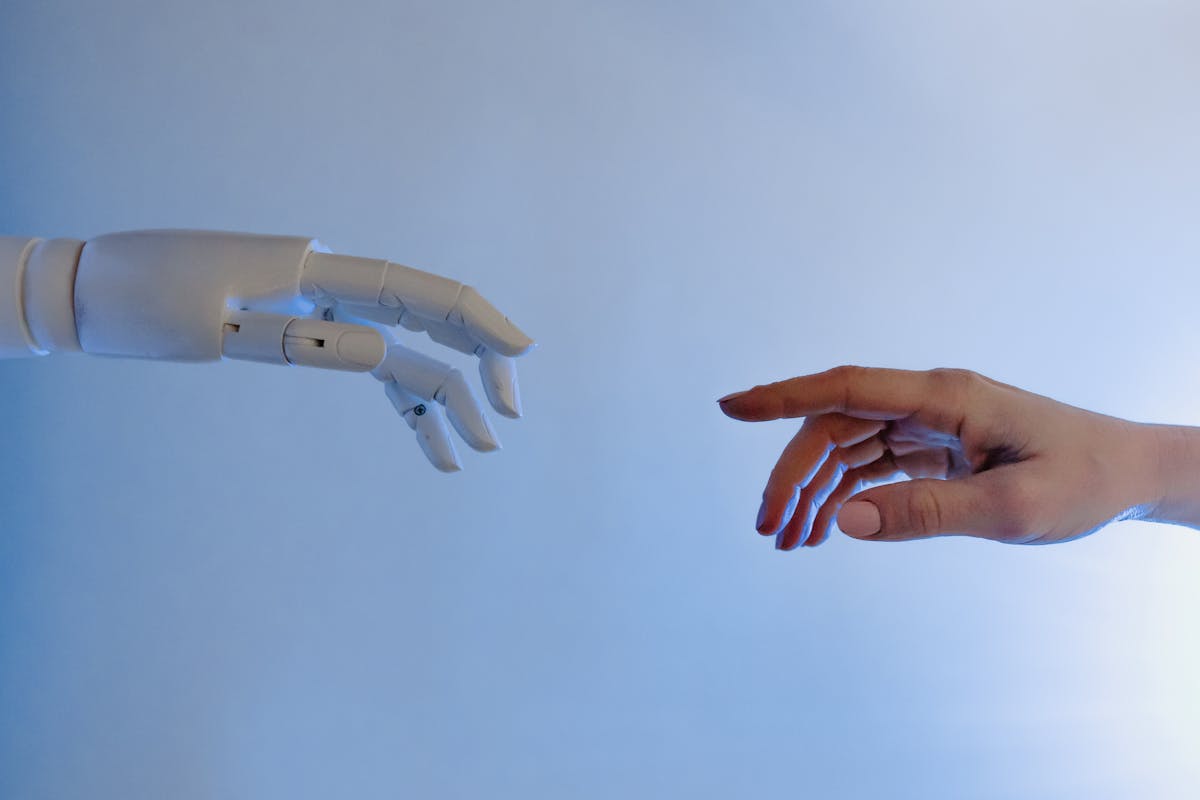
AI and technology concept — Neural networks powering the next wave of innovation (Image: Pexels)
Microsoft's MAI Launch: Seven New Models and Frontier Tuning
Microsoft dropped seven new MAI models simultaneously this week, headlined by MAI-Code-1-Flash — a coding-optimised model available on OpenRouter, Fireworks, and Baseten (source). This is the first time developers can tune the weights of a Microsoft model themselves, which signals a significant shift in Microsoft's AI strategy — from a consumer-focused AI company (Copilot, Bing Chat) to a serious model provider competing with OpenAI, Anthropic, and DeepSeek.Frontier Tuning: Your Workflow, Your Model
The real differentiator is what Microsoft calls Frontier Tuning. Instead of generic fine-tuning, it uses reinforcement learning environments (RLEs) that let models learn from your organisation's actual workflows. Think of it as a private training gym for AI. The numbers are compelling:- Microsoft's Excel-tuned MAI model matches GPT 5.4 while being up to 10× more efficient
- A McKinsey enterprise-tuned version achieved the highest win rate of any model tested at roughly 10× lower cost
Healthcare AI and Self-Sufficiency
Microsoft also announced a frontier healthcare AI model co-created with the Mayo Clinic — owned by Mayo, trained on their de-identified clinical data, and deployed first within their environment before being made available via Azure Foundry. This is a reference architecture for any healthcare institution thinking about private AI deployment. The entire MAI family is built on Microsoft's own Maia 200 silicon, already showing a 1.4× efficiency gain. Microsoft describes its approach as "zero distillation" — training from scratch on clean, licensed data, not distilling from other labs. For Singapore organisations assessing AI vendors, this matters: it means Microsoft isn't dependent on OpenAI's models anymore.Project Glasswing Expands: 10,000+ Vulnerabilities Found, 150+ Organisations Onboarded
Anthropic's Project Glasswing has grown dramatically since we covered it last week in our analysis of AI-powered cybersecurity. The initial update was already striking — 50 partners finding over 10,000 high- or critical-severity vulnerabilities in one month. Now Anthropic is expanding to 150+ organisations across 15+ countries (source).What's Changed
The new partners cover critical sectors that weren't in the first cohort: power, water, healthcare, communications, and hardware. Many are vendors whose code is used by governments worldwide. Anthropic estimates a successful attack on any one could affect over 100 million people. Cloudflare's results are illustrative: they found 2,000 bugs (400 high/critical severity) with a false-positive rate their team considers better than human testers. The bottleneck has shifted from finding vulnerabilities to patching them.The Urgent Timeline
Here's the critical warning from Anthropic's update: "Within 6 to 12 months, we expect that many other AI companies will have Mythos-class models, and they could release them without safeguards that prevent misuse." Anthropic has released Claude Security, a product using Claude Opus 4.8 for codebase scanning and patching. For Singapore's MAS-regulated financial institutions and agencies running Singpass, LifeSG, and CPF systems, this is worth evaluating now — the regulatory consequences of a major breach under the Cybersecurity Act and PDPA are severe.GovTech's AI Agent Registry: Singapore's Practical Answer to AI Governance
While Microsoft and Anthropic push model capabilities, Singapore's GovTech is solving a harder problem: how do you deploy AI at scale without losing control? The AI Assistant Desk suite, currently in testing with some public officers, provides (source):- A registry of AI agents for 150,000 public officers — tracking who owns each agent and what it does
- Granular security controls — disallow file deletion, external email, impose recipient limits
- Automated hygiene checkers that scan prompts and outputs for offensive or problematic content
- Third-party AI tool compatibility while maintaining consistent security layers
Real Deployments, Not Pilots
Two projects are already in the field:- Markly: AI marking assistant for handwritten English and geography scripts, trialled in 18 local schools. Planned integration with Google Classroom and Student Learning Space.
- LangBuddy: Web-based AI voice chatbot for language learning.
Related: We covered the broader AI agent trend for developers in our Guide to Agentic Coding — GovTech's governance-first approach mirrors the responsible deployment practices we discussed.
The Economic Backdrop
Singapore's PMI hit 51.0 in May — the 10th straight expansion month and highest since December 2024. The electronics sector clocked 51.9 for its 12th consecutive month of growth. DBS economist Chua Han Teng attributed this to "global AI-related tailwinds" driving demand for Singapore's memory chips and server products. And at Computex Taipei on June 1, Nvidia CEO Jensen Huang announced the H2 Plus humanoid robot — a collaboration between Nvidia, Singapore's Sharpa (robotic hands), and Chinese robot maker Unitree. Sharpa's 22-degree-of-freedom hands are designed to mimic human dexterity for precise assembly, food preparation, and even medical tasks. The H2 Plus is scheduled for late-2026 rollout.What This Means for You (and What to Do Next)
This is one of those weeks where the global AI story and the local Singapore story converge so tightly that the headlines write themselves. Here's the actionable takeaway: If you're a developer: Start experimenting with MAI-Code-1-Flash on OpenRouter, especially if you're in a PDPA-regulated industry. The Frontier Tuning capability — training models on your own workflows — could be a game-changer for building internal AI tools that don't leak data to third parties. Also: GovTech's AI Assistant Desk suite suggests government AI contracts are about to expand. Watch the procurement notices. If you're in security: Run Claude Security against your codebase. The 6-12 month timeline before Mythos-class models become widely available is real. The organisations that patch proactively now will be the ones that don't make headlines later. If you're an investor: Singapore's electronics PMI and the Sharpa-Nvidia collaboration both confirm the AI hardware and robotics stories are real. Companies tied to memory chips, servers, and AI-adjacent manufacturing remain well-positioned. If you're a tech manager or policymaker: The GovTech AI agent registry is one to watch closely. It could set a template for how Singapore banks, hospitals, and enterprises deploy AI agents with proper governance. Reach out to GovTech's team for early access or collaboration opportunities. The pace of AI development isn't slowing down. But neither is Singapore's approach to deploying it responsibly. That combination — global capability, local governance — might just be our competitive advantage.This article was researched using publicly available sources including Microsoft AI, Anthropic, and The Straits Times. All facts current as of June 3, 2026.